You can have the best rod, the sharpest hooks, and live bait swimming in perfect circles — and still get skunked. In saltwater, the best tide for saltwater fishing is usually what decides whether you catch fish or just take the boat for a ride. Moving water triggers feeding. Dead water puts the whole food chain to sleep. This guide shows you how to read tide charts in 30 seconds and pick the right tide for every inshore trip.
Why Tides Matter More Than You Think
Tides move enormous volumes of water in and out of bays, creeks, mangroves, and passes twice a day. That current does three things baitfish and predators can't ignore:
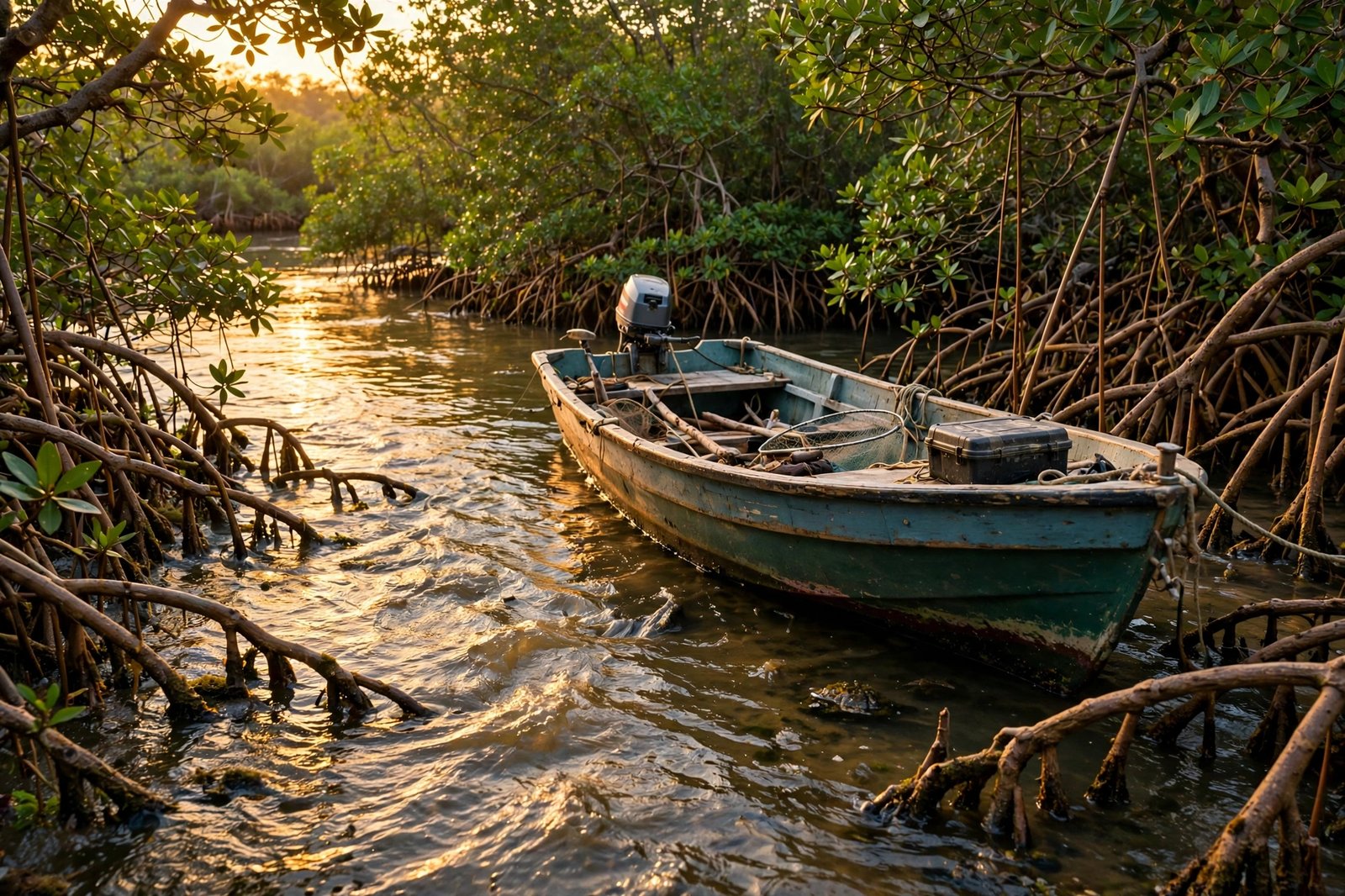
- It delivers food. Shrimp, crabs, and small baitfish get flushed out of grass flats and mangrove roots on the outgoing tide — right into the mouths of waiting redfish, snook, and trout.
- It concentrates fish. Predators stage at ambush points — creek mouths, docks, bridge pilings, and cuts — where current funnels the buffet past them.
- It oxygenates and cools. Moving water carries oxygen and bait; stagnant water at slack tide often goes quiet for an hour or two.
Ask any veteran inshore guide, and you'll hear some version of the same rule: no current, no fish. The tide doesn't guarantee a catch — but fishing the wrong tide makes catching one far harder.
Tides 101: The Only Basics You Actually Need
High tide, low tide, and slack water
Most U.S. coasts see two high and two low tides per day (semidiurnal), roughly six hours apart. Each cycle has a flood (incoming), high slack, ebb (outgoing), and low slack. The prime feeding windows are almost always during the moving phases — the first two hours of the incoming and the first two hours of the outgoing.
Spring tides vs. neap tides
Around the new and full moon, the sun and moon line up and produce spring tides — bigger swings and stronger currents. Around the quarter moons, you get neap tides — smaller swings and gentler current. Stronger current usually means more aggressive feeding, but on extreme spring tides the water can move too fast in narrow cuts, making fish hug structure and ignore lures. Match your plan to the range: big swings mean fish the edges and slack pockets; small swings mean cover more ground.
So, What Is the Best Tide for Saltwater Fishing?
If you only remember one sentence: fish moving water, and plan to be there for the first two hours of the outgoing tide. The ebb pulls bait out of the grass and mangroves, and redfish, snook, and speckled trout know exactly where the exits are. A close second is the first two hours of the incoming, when clean, oxygenated water pushes baitfish up onto flats predators can patrol.
The honest answer depends on your spot — some cuts fish best on the last of the incoming, some flats only come alive at low slack. That's why logging your catches with the tide stage (something the COUNT THE CATCH app makes easy) turns guesswork into a pattern over a few trips.
7 Proven Tips to Fish the Tides
1. Fish the first two hours of the outgoing tide
This is the single highest-percentage window in inshore fishing. Set up at creek mouths, cuts, and drains while the water is still coming out. Bait can't hide, and predators know the schedule.
2. Work structure during the incoming
As water rises, fish push up onto flats and into mangrove edges. Cast soft plastics or live shrimp tight to structure and let the current do the work. Cover water until you find the bite, then slow down.
3. Avoid dead slack — but use it to reposition
Slack tide usually means a slow bite. Instead of casting into still water, use the lull to move, re-tie, grab water, or get into position for the next push. Be ready when the current starts again.
4. Pair tide with light
An outgoing tide at dawn or dusk is the combination inshore anglers dream about. Low light hides you and your line, and feeding fish are less cautious. If you can only pick one trip this week, pick the day when a moving tide overlaps sunrise or sunset.
5. Match your lure to the current
In fast water, fish feed by sight ambush — use lures that flash or thump, like gold spoons, paddle-tail swimbaits, or noisy topwaters, and retrieve just fast enough to stay in the strike zone. In slow water, switch to subtle presentations: shrimp under a popping cork, or a slow-crawled soft plastic.
6. Fish the edges of big spring tides
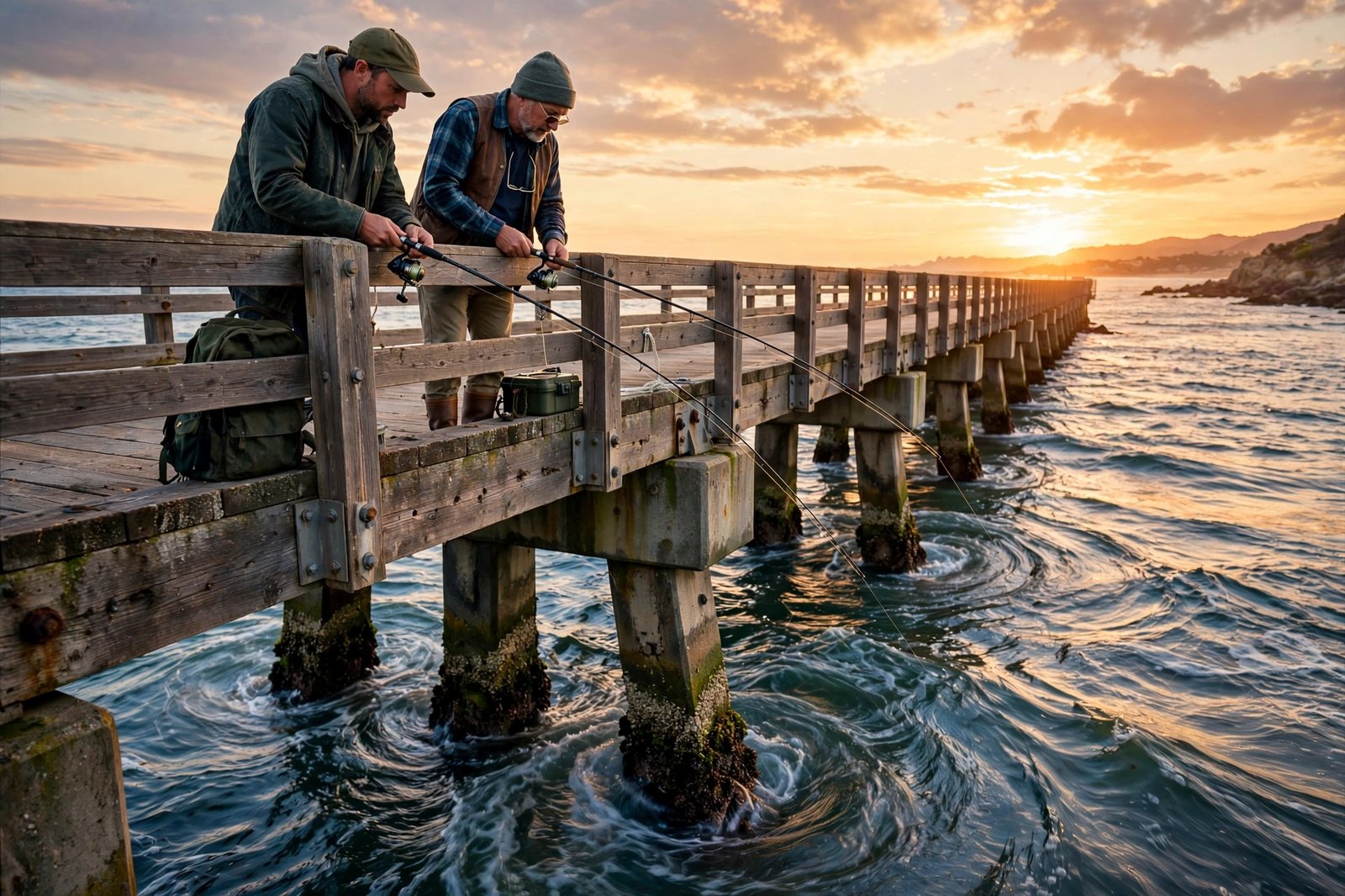
When the current rips, predators hold behind current breaks — the downstream side of pilings, oyster bars, and points. Cast up-current of the break and let your bait sweep naturally into the eddy. Fishing where the fish rest beats casting into the fastest water.
7. Check a tide chart before every trip
This takes 30 seconds. Open a tide chart for your exact spot (not a town 20 miles away), note the high/low times and the swing, and plan to be fishing through the movement. Then write down the tide stage next to every catch in your log — after a handful of trips, you'll see your pattern for your spots.
How to Read a Tide Chart in 30 Seconds
- Find your station. Tides vary wildly even a few miles apart — always use the closest station.
- Read the highs and lows. Note the times and the height difference (the "range").
- Plan around movement. Target the 2 hours after high or low tide starts to turn — that's your window.
- Check the range. Big range (spring) = stronger current; small range (neap) = gentler current. Adjust lure and spot choice.
Key takeaway: Moving water is the whole game. Fish the first two hours of the outgoing tide, the first two hours of the incoming, and log the tide stage with every catch — your pattern will appear fast. Browse inshore tournaments on COUNT THE CATCH →
Put the Tide to Work in Competition
In a catch-photo-release tournament, timing matters more than tackle. Anglers who arrive when the tide turns consistently put more scorable fish on the board — and since every catch needs a clear, timestamped photo, arriving with a plan beats arriving early. If you're ready to test your tide timing against other anglers, check the tournament board and fish with intent: one moving tide, one flat, one honest photo at a time.