You can find the fish, make the perfect cast, and land the catch of the day — and still lose the tournament at the measuring board. In catch-photo-release (CPR) events, which now dominate both freshwater bass circuits and inshore saltwater tournaments, your measurement is your score. A fish measured at 21.75 inches instead of 22 costs you a quarter inch on the leaderboard. A photo where the nose isn't touching the bump, or the tail is pinched shut, can get the entire catch thrown out.
This guide covers the exact technique judges and tournament directors want to see, the mistakes that cost anglers placements every weekend, and how to document your fish so every inch counts.
Why Tournaments Are So Strict About Measurement
Live weigh-ins still exist, but most modern tournaments — especially kayak, bank, and online events — run on length instead of weight. Length is verifiable from a photo: the fish lies on a standardized board, the measurement is visible, and a judge can confirm it later. That only works if every angler follows the same procedure. When one person pinches the tail and another doesn't, you're not comparing the same thing.
Strict rules aren't about making your life harder. They're what make the results trustworthy when the winner is decided by a quarter inch.
The Tool: A Proper Measuring Board
Almost every CPR tournament requires a rigid bump board — a flat board with a vertical wall (the "bump") at the zero end and a printed or engraved scale. Don't use a soft tape measure: it follows the curve of the fish's body and always reads long, which is exactly why directors ban it.
What to look for in a board:
- Rigid construction — it shouldn't flex when a 10-pound fish flops on it.
- Clear 1/4-inch markings — most tournaments score to the nearest quarter inch, and some go to the eighth.
- A true 90-degree bump — the fish's nose must sit flat against it.
- High-contrast numbers — if the judge can't read the scale in your photo, the fish doesn't count.
Step-by-Step: The Correct Measuring Technique
Do it the same way every single time. Consistency is what keeps you out of trouble.
1. Wet the board first
Splash water on the board before the fish touches it. This protects the fish's slime coat — critical for catch-and-release — and keeps the fish calmer, which means less flopping and a cleaner photo.
2. Nose firmly against the bump
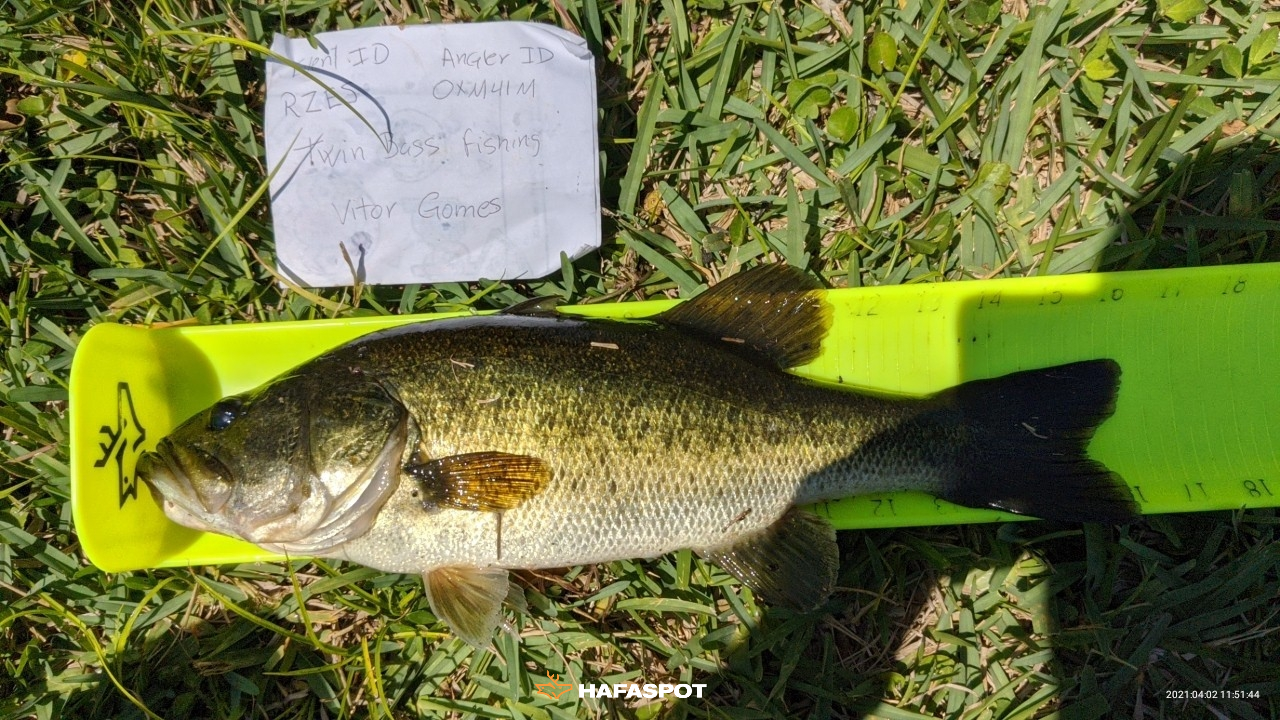
Lay the fish on its side with its nose (closed mouth, lower jaw) pressed flat against the vertical bump at zero. This is the single most common disqualification point: if there's daylight between the nose and the bump, judges will reject the catch or deduct length.
3. Let the body lie naturally
Don't stretch the fish. Don't compress it. Let it lie as it naturally falls on the board. Straighten it gently if it's curved, but never pull the tail to gain length — directors know what a stretched fish looks like.
4. Tail position: know your tournament's rule
This is where anglers get burned. Some tournaments measure with the tail pinched (lobes squeezed together for maximum length); others require it unpinched (tail in its natural fanned position). Read your tournament's rules before launch — a pinched tail in an unpinched tournament is an automatic deduction or DQ, and vice versa.
5. Read at the longest point
The official length is the longest point of the tail touching or crossing a mark. If the tail tip falls between marks, tournaments round down to the last fully crossed mark. A fish reaching 21 and 3/8 inches scores as 21.25, not 21.5.
6. Document it before the fish moves
Take your photo or video while the fish is still perfectly positioned. One clear shot showing the nose on the bump, the full body, and the readable measurement beats five blurry ones. Then get the fish back in the water fast — most CPR formats expect release within a couple of minutes.
Pro tip: Take two photos — one wide shot showing the whole board and fish, one close-up of the tail on the scale. If a judge questions the measurement, the close-up settles it.
5 Mistakes That Cost Anglers Placements
- Nose off the bump. Even a half-inch gap is visible in photos and will get flagged.
- Wrong tail rule. Pinched vs. unpinched — check the rules sheet, not your memory of last month's event.
- Unreadable scale. Glare, mud, or a faded board means the judge can't verify. Wipe the board and angle away from direct sun.
- Fingers covering the measurement. Hold the fish behind the gill plate or mid-body — never over the tail or the numbers.
- Measuring on an unapproved device. If the rules say "approved bump boards only," your tape measure or cooler lid doesn't count, no matter how accurate it is.
Freshwater vs. Saltwater: What's Different
The technique is the same, but the context changes. Freshwater bass tournaments (largemouth, smallmouth) almost universally use 1/4-inch scoring on bump boards, with heavy emphasis on quick release. Saltwater events — redfish, snook, trout slams — often deal with slot limits set by state regulations, so your measurement doubles as legal compliance: a redfish outside the slot isn't just a lost fish, it's a potential violation. Know both your tournament's rules and your state's size limits before you launch. (Our Resources page links official regulations by state.)
How Technology Is Changing Verification
The direction of the sport is clear: photo-only submissions are giving way to richer evidence. Some platforms now accept video verification, where a short clip shows the fish being placed on the board, measured, and released — much harder to fake than a still photo and much easier for judges to confirm. When you fish a tournament on COUNT THE CATCH, you can submit photo or video evidence for every catch, and the app walks you through exactly what the judges need to see, so the mistakes above never cost you a fish.
Quick Checklist Before Every Tournament
- Board is rigid, clean, with readable 1/4" markings
- You know the tail rule (pinched vs. unpinched)
- You know the rounding rule (almost always round down)
- Phone/camera charged, lens clean
- State slot limits checked for your target species
- Release gear ready (gripper, dehooker) for a fast, safe release
Measuring a fish correctly takes about thirty seconds once it's habit. Those thirty seconds are the difference between a catch that counts and a story about the one that got away — from the leaderboard, anyway. Tight lines, and we'll see you on the water.
Ready to put it into practice? Browse upcoming tournaments on COUNT THE CATCH and fish your first CPR event with photo and video verification built in.