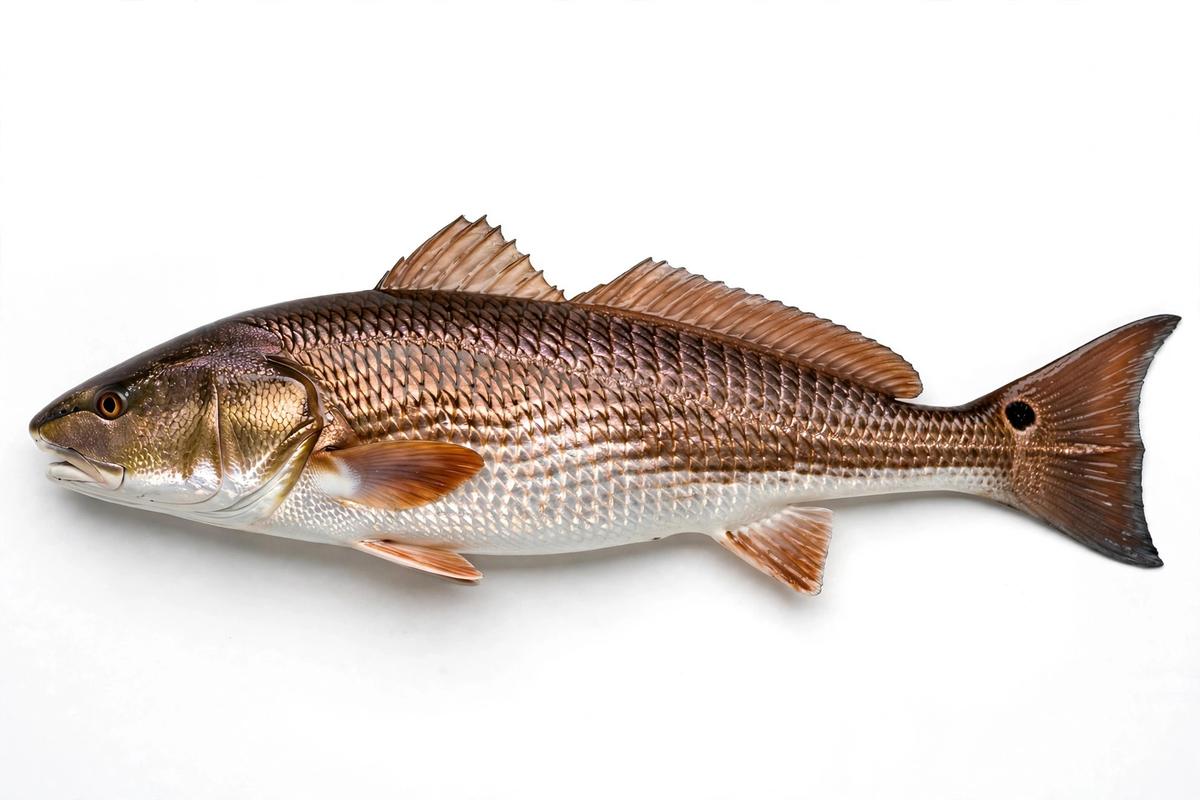
If you only learn how to catch redfish in one season, make it fall. As the water cools into the 70s, bait pours out of the marshes and creeks, and redfish — red drum — group up in schools and feed hard before winter slows everything down. This guide covers where fall redfish go, what they eat, and the simple approach that puts you in front of them instead of behind them.
Why Fall Is Prime Time for Redfish
Redfish are opportunistic feeders that live on shrimp, crabs, and small baitfish. Fall concentrates all three. Migrating mullet and other baitfish move through bays and along the beaches, falling tides drain the marsh and flush shrimp and crabs into open water, and cooling water tells every predator the same thing: eat now, while it is easy.
That urgency changes redfish behavior in your favor. Fish that spread out and spook easily in summer travel in schools in fall, compete for the same lure, and stay in a feeding mood longer each day. Slot-sized reds work the shallow inshore water, while the big spawning “bull” reds gather around passes, inlets, and deeper channel edges.
Where to Find Fall Redfish
Do not start by picking a lure. Start by picking the kind of water a feeding redfish cannot resist, then work it in this order:
- Grass flats with sandy potholes. The classic fall stage. Reds cruise the grass, tail over the potholes, and ambush what the mullet schools stir up.
- Oyster bars. Oysters hold crabs and baitfish year-round, and a bar next to slightly deeper water is a redfish cafeteria on almost any tide.
- Creek mouths and marsh drains. On a falling tide, everything the marsh was hiding has to leave through these funnels — and redfish wait at the exit.
- Mangrove edges and shorelines. As the tide rises, reds push right up to the roots to hunt shrimp and crabs that felt safe an hour earlier.
- Passes, inlets, and channel edges. This is bull redfish water in fall. Heavier current, deeper structure, and big bait moving through on the tide.
Read the signs before you cast
Fall redfish announce themselves if you slow down and look. Watch for tails waving over a flat, a wake or “push” of nervous water moving against the tide, bronze flashes under the surface, and bait scattering for no visible reason. A school of mullet crossing a flat is worth following: mullet stir up shrimp and crabs as they go, and redfish often travel right behind them collecting the free meal. No signs, no bait, no birds? Move.
Best Baits for Fall Redfish
Live and cut bait: let scent do the work
A live shrimp under a popping cork or free-lined tight to a mangrove edge is still the most reliable redfish presentation in inshore water. Finger mullet and pinfish step up the size for bigger fish, and a chunk of fresh cut mullet or ladyfish on the bottom is hard to beat in stained water — redfish find cut bait by smell long before they see it. For bull reds at the passes, a half blue crab on a stout circle hook is the classic offering, and circle hooks make a clean release much easier.
Best Lures for Redfish in Fall
The weedless gold spoon
If redfish have one weakness, this is it. A weedless gold spoon wobbling slowly just over the grass flashes like a wounded baitfish, casts a long way in the wind, and works on days too cloudy for sight-fishing. Cover the flat with it until a redfish tells you where the school is.
Paddle tails and shrimp imitations
A 3- to 4-inch paddle tail on a light jighead (about 1/8 to 1/4 ounce, matched to depth and current) is the most versatile redfish lure you can tie on — swim it over the flat, hop it through the potholes, or slow-roll it along a channel edge. A soft-plastic shrimp under a popping cork does the same job with sound added: the cork's chug mimics feeding fish, and the shrimp hanging below is an easy target.
Topwater at first and last light
When a school is pushing bait at dawn or dusk, a walking topwater plug can draw the most violent strikes of the season — sometimes three fish compete for the same plug. Keep the retrieve steady, and do not stop when a fish swipes and misses: schooled reds often come back for a second and third try.
Tackle That Handles Both Games
For slot reds on the flats, a 7-foot medium to medium-heavy spinning rod with a 3000–4000 reel, 15–20 lb braid, and a 20–30 lb fluorocarbon leader covers almost everything in this guide. Step up one size for bull reds at the inlets, so a big fish spends minutes — not half an hour — on the line. In shallow water, stealth matters as much as tackle: pole or use the trolling motor on low, keep noise off the hull, and cast ahead of a moving school, never into the middle of it.
Time It With the Tide
Fall does not cancel the oldest inshore rule: moving water catches fish. Fish the incoming tide up onto the flats and against the mangroves, then set up at creek mouths and drains as it falls and the marsh empties. Our guide to the best tide for saltwater fishing shows how to read a tide chart in 30 seconds. Log the tide stage with every catch in your COUNT THE CATCH journal, and your flats will start giving up their schedule within a few trips.
Key takeaway: In fall, find the school before you pick a bait: grass flats, oyster bars, and creek mouths on moving water, with mullet schools as your map. A gold spoon finds them, a paddle tail or live shrimp finishes the job, and every catch you log makes the next trip easier. Browse tournaments on COUNT THE CATCH →
Handle the Big Ones Right
Those bull reds at the passes are the breeding stock for the whole fishery, and in most places the biggest fish must go back. Keep them in the water when you can, support them horizontally with two hands for the photo, and revive them facing the current until they kick away on their own. Slot limits and seasons vary by state, so check your current local rules before you keep anything — our resources page is a good starting point. A quick, correct measurement — the technique from our tournament measuring guide — gets a fish scored and released in under a minute.
Go Find a School This Week
Pick one flat with an oyster bar and a creek mouth, arrive as the tide starts to move, and spend the first ten minutes just watching: tails, pushes, mullet, birds. Then let a gold spoon search, a paddle tail pick apart the potholes, and a shrimp under a cork clean up the mangrove edge. That is the whole fall playbook — and October and November are when it works best. Tight lines, and we will see you on the leaderboard.