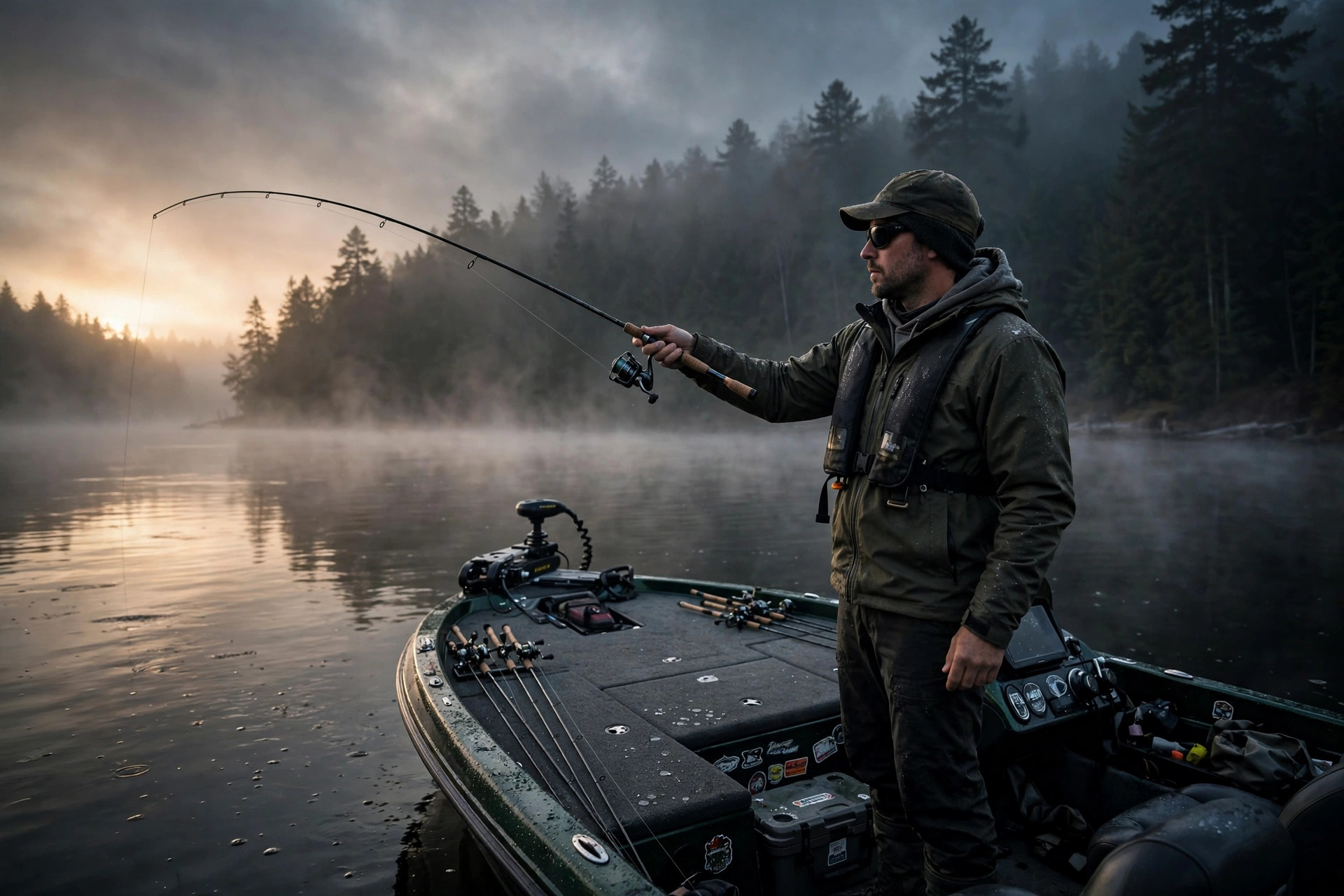
Fall bass fishing can feel like a magic trick: one empty cove, then the next one erupts. The secret is not a secret lure. In fall, largemouth bass follow the shad. As the water cools, threadfin and gizzard shad leave deep summer water and push toward creek arms, flats, and the backs of coves — and bass follow them to feed hard before winter. Find the bait first, and you have already done most of the work.
Why Fall Bass Follow the Shad
All summer, bass spread out: some deep, some shallow, some suspended. Fall compresses the lake. Shorter days and cooling water pull baitfish into tighter schools that follow a predictable route from the main lake into the creeks. Bass no longer hunt the whole lake — they wait where the food is traveling.
That is why fall fishing is both exciting and frustrating. Away from bait, you can cast perfectly for hours and catch nothing. Find shad flickering on the surface, birds diving, or bass busting a school, and you can catch several fish in twenty minutes. The pattern is the bait, not last October's spot.
Read the Fall Transition in Three Stages
Water temperature varies by lake, but these ranges guide most U.S. reservoirs. Use them as stages, not strict rules — and adjust for your region.
Early fall: roughly 75°F down to 65°F
Bass start leaving deep summer structure but are not yet committed to the backs of creeks. Start at creek mouths, main-lake points, humps, and channel swings — the staging areas between deep and shallow water. This is a search phase: cover water, watch your electronics and the surface, and note where you first see bait.
Peak fall: roughly 65°F down to 55°F
This is the window most anglers wait for. Shad push farther into creek arms and onto shallow flats, often in just 2 to 8 feet of water, and bass feed aggressively around creek channels, secondary points, laydowns, docks, and any remaining green vegetation. If you only get a few fall trips, aim for this stage.
Late fall: below about 55°F
As the water keeps cooling, bait and bass gradually pull back toward deeper creek-channel bends, bluff ends, and main-lake structure, and the bite windows get shorter. Slow down, fish more precisely, and expect quality over quantity.
South Florida note: the clock runs slower in the far south. Lakes and canals cool gradually, so the shallow shad pattern can stretch much later than farther north. Watch the bait and the morning water temperature, not just the calendar.
Where to Find Fall Bass, in Order
- Creek mouths first. This is the highway entrance. Fish the point, the first drop, and the edge where the creek channel meets the flat.
- Secondary points inside the creek. If bait is already inside, bass often set up on the first points and bends rather than at the very back.
- Flats next to the creek channel. Shallow water close to deeper water is ideal: bass can feed shallow and retreat quickly.
- Remaining green cover. Green grass, pads, wood, and docks that are still alive hold warmth, bait, and ambush cover long after brown, dying cover goes quiet.
- Wind-blown banks. A light wind pushes bait and surface food against one side of a cove and often turns a dead bank on. If one side is calm and empty, try the windy side before you leave.
No bait, no bass is a useful rule here. Give a spot ten or fifteen focused minutes. If you see no bait, no birds, and no surface activity, move. In fall, moving is a technique.
Best Lures for Fall Bass Fishing
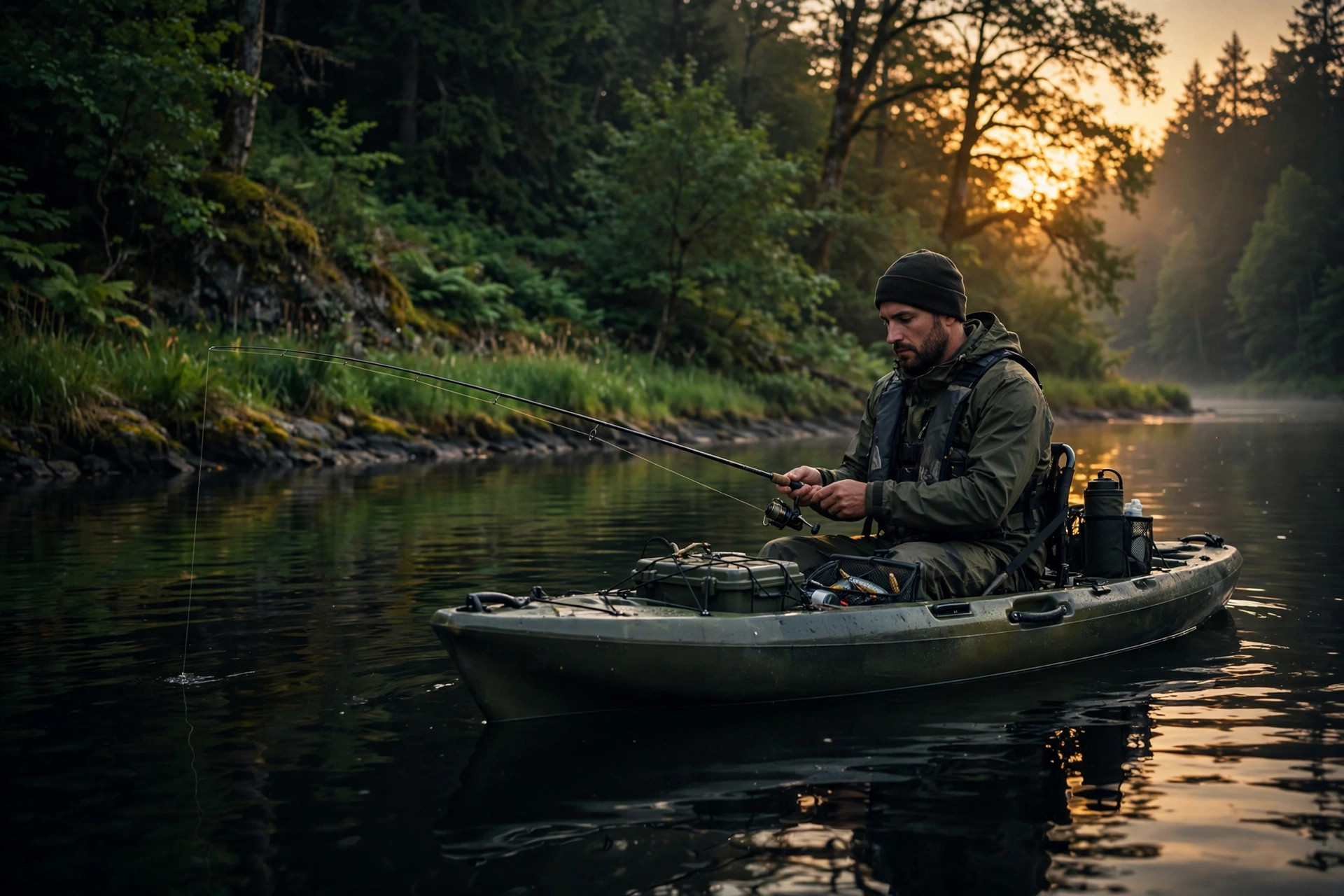
You do not need ten rods — just lures that imitate shad, cover water at different speeds, and let you slow down when a cold front shuts the chase off.
Lipless crankbait: the fall search bait
A lipless crankbait in a shad or chrome pattern covers flats fast and triggers reaction strikes. Burn it, yo-yo it off a point, or rip it through sparse grass and let it fall. If bass are feeding on shad nearby, this is often the fastest way to get bit.
Squarebill and spinnerbait: shallow power
A squarebill crankbait bangs off rock, wood, and dock posts in 2 to 5 feet of water — exactly where fall bass ambush bait. A spinnerbait with willow blades adds flash in stained water and around wind-blown banks, and it comes through cover a crankbait would hang on.
Topwater: when they are busting on top
When bass are visibly pushing shad to the surface, a walking bait, popper, or buzzbait can produce the best strikes of the year — especially at dawn, at dusk, or under clouds. Do not start with topwater everywhere; throw it when the fish show you they are looking up.
Jerkbait and finesse: the cold-front backup
After a sharp cold front, the chase can die even though the bass are still there. Slow down with a suspending jerkbait on a twitch-pause retrieve in clearer water, or a soft plastic fluke, shaky head, or creature bait pitched tight to wood and docks. Matching the size of the local shad matters more than throwing the loudest lure in the box.
Key takeaway: In fall, locate the shad before you pick a lure. Creek mouths, secondary points, and flats next to the channel are your starting grid — then let the bait and the water temperature tell you how fast to fish. Log the water temp, lure, and depth with every catch in your COUNT THE CATCH journal and your own lake's pattern will get clearer each trip. Browse tournaments on COUNT THE CATCH →
A Simple Three-Hour Fall Game Plan
- Hour one — search. Start at a creek mouth with a lipless crankbait or spinnerbait. Cover the point and the flat edge, and watch constantly for bait, birds, and surface strikes.
- Hour two — follow the bait. If you found bait or got bit, work inside the creek: secondary points, the channel edge, and green cover. If the creek is empty, do not force it — move to the next creek.
- Hour three — slow down on the best spot. Return to wherever you saw the most life and fish it thoroughly with a squarebill, jerkbait, or soft plastic. Fall schools reward a second, slower pass.
And measure every fish correctly before release. In catch-photo-release events, a clean photo on a bump board turns a great fall morning into a score that counts — our guide to measuring a fish correctly for tournaments covers the technique.
Put the Shad Pattern to Work
Fall rewards anglers who stay mobile and honest: if there is no bait, move; if they are chasing, fish fast; if a front shuts them down, slow down instead of going home. Pick one creek this week, run the three-hour plan, and note what the bait was doing. That habit — following the shad instead of fishing memories — can turn a quiet October into your best bass month of the year.